SEO

how to write a good meta description

How to Write a Good Meta Description 

Are you wondering how to write a good meta description? Read this blog till the end to get the expert tips for writing a meta description. If you run a website, you must have come across the term “meta description”. Everyone keeps talking about how important it is but no one really tells how to write a good meta description. These short lines are very important for your website performance and now with our help, you can start writing descriptions that yield immediate results. In this blog, we will tell you what a meta description is to people who are unclear about the term. Then we will tell you what a good meta description can do for your website, especially if you are running a business website. In the end, you will be given a short guide on how to write a good meta description. Let’s begin! Click here to learn about the best SEO agency in London! What is a Meta Description A meta description is a short summary of the content that you provide to your audience for a web page. This description appears on the SERPs telling the users what they can learn once they click on the link. If you are searching on Google and come across different web pages, you will most likely read the short description before clicking on the link. Your audience does the same. Therefore, meta descriptions need to be compelling but there is a lot more on that later. What Does a Meta Description Do? If you are not writing good meta descriptions, most CMS such as WordPress automatically insert a  description from the first para. Although this ensures that your content does have a meta description, it is not a good strategy. Why? Because the first few lines of your content might not be enough to convince your readers to click on your link. Therefore you need to write meta descriptions manually. Here is why you should invest your time in these descriptions: 1. Gives a Good First Impression When your meta description is optimised, it gives a good first impression to your audience. It tells your audience that your content is easy to read and well-researched. Therefore, they will click on your website, increasing your CTR. 2. Summarises the Text in One line There is a lot of content on the internet. Therefore, you need to make it easier for readers to visit your website. A meta description attracts that audience by providing them a glimpse of what the content is about. 3. Enhances SEO Search engine optimisation is crucial for a website. Optimising your meta description tells SEO algorithms what your content is about. Once they understand what your content is, they will rank it higher for the keywords that you have used. How to Write a Good Meta Description in 5 Steps We hope that the above sections have clarified what a meta description is and why they are important. Now let’s move on to our short guide on how to write a good meta description: 1. Conduct a Keyword Research You should not be publishing content of any sort without conducting keyword research. Carry out thorough research to learn about the phrases and words your audience is searching for. Once you know what your audience is looking for, you can create content to their liking. 2. Incorporate the Focus Keyword in the Meta Description Once you know what keyword is popular for your readers, include it in your meta description. This signals SEO algorithms that your content carries the phrase that people are searching for. As a result, it is ranked higher on SERPs. 3. Keep it Concise This is the most important step of how to write a good meta description. While writing, remember that a meta description is a summary. You have to keep it concise and short for enhancing user experience. A perfect description is 155-160 characters long, so do not exceed that mark. 4. Make it  Actionable A good meta description compels the reader to learn more by clicking on the link. Tell your audience how clicking on the link will add value to their life. Make it actionable using words such as learn, discover, and click etc. 5. Test and Optimise It is important to go back and optimise your content and meta description. If your content is not performing well, edit it and optimise it for your audience. If you are looking to optimise your website, contact us! Summing it Up! Let’s review what we have discussed so far. A meta description is a small summary of your content that appears on SERPs. It tells your audience what the content is about and whether should they click on your link. In addition, a meta description gives a good first impression while enhancing your SEO ranking. You can follow this guide on how to write a good meta description for yourself. Start by conducting keyword research and using docus keywords in your meta description. Ensure that your descriptions are concise and actionable. Lastly, test and optimise your content and meta descriptions to see what works. We at SEO Syrup understand that optimising your web content can be technical. Therefore, we provide our clients with the best SEO services in the UK. Click here to get an instant quote!

How to Write a Good Meta Description  Read More »

how to calculate bounce rate

How to Calculate Bounce Rate? A Complete Guide

Are you wondering how to calculate bounce rate? Then here is a complete guide to help you out. Bounce rate is a term that you hear often if you are running a website. Some people say that your bounce rate reflects your business, while others completely ignore it. But what exactly is it, and how does one calculate the bounce rate? In this blog, we will try to answer all of your questions regarding bounce rate. First, we will start by defining it and seeing why it matters. Then we will tell you how to calculate the bounce rate easily. Lastly, you will be given some expert tips to reduce the bounce rate on your website. Read till the end! Click here to get the best SEO experts in London! What is the Bounce Rate? Bounce rate is a measure that shows you how many people leave your website after viewing only one page. If your bounce rate is high, then it indicates that your users are not engaging with your website. Or, in simpler terms, a higher number of people leave your website after seeing only one page. However, if your bounce rate is low, then this means that your pages are well integrated. When a person clicks on a link to your website and they are compelled to see other pages, that leads to a reduction in the bounce rate. Why Does the Bounce Rate Matter? Before we move on to how to calculate bounce rate, let’s answer whether it really matters. Well, yes, if you are attempting to reach a wider audience. Bounce rate is very important as it gives you a measurement of whether people are interested in your content or not. You can use bounce rates to redesign your content strategy to reach a wider audience. Here are some of the reasons why bounce rate is highly important: 1. User Engagement Firstly, and most importantly, the bounce rate tells you whether your content is engaging or not. When your bounce rate is low, it means that instead of just seeing one page, the users are compelled to visit another. This shows that your website is well-integrated and engages the user with more content. 2. Conversion Rate If you have a low bounce rate, you will likely have a high conversion rate. The conversion rate shows how many people take the desired action after visiting your website. The action could be purchasing your product, signing a petition, or anything else. 3. SEO Impact Search engine algorithms like Google take into account the bounce rate while ranking your website. If your website has a low bounce rate, Google algorithms will see this as a positive signal and rank your website higher. Therefore, you will reach a wider audience and generate more leads. How to Calculate Bounce Rate? Now let’s learn how to calculate bounce rate. Although the bounce rate is provided by Google Analytics, you can also calculate it manually. To do so, you will need to know the number of single-page sessions and the total number of sessions within a given period of time. Single-page sessions are the number of times people click on your link and close it without clicking on any other link on your website. To calculate your bounce, use this formula: Bounce Rate = (Single-Page Sessions) / (Total Sessions) * 100 #GRAPHIC# What does 5% Bounce Rate Mean? If you have a bounce rate of 5 percent, then that means that only 5 out of 100 people close your website after seeing only one link. The lower the bounce rate, the better it is, and the higher it is, the worse. This is usually confused by people. What Can You Do to Reduce Bounce Rate? Now that you know how to calculate bounce rate, let’s learn how you can improve it. There are many SEO techniques to enhance your bounce rate. Following are some of the tips you can follow: Improve your content quality to engage the audience. Optimise your website to reduce loading speed. Design your website so it is easier to navigate for users. Optimise your website for mobile devices so it’s easier to use on smaller devices. Add relevant internal links to guide users to different pages of your website. If you are looking for SEO experts and web developers, contact us! A Quick Summary If you are wondering how to calculate bounce rate, you need to know what it is. The bounce rate shows you the number of people who close your website after viewing only one page. It is important because it tells you whether your content is engaging or not. In addition, a lower bounce rate leads to higher SEO rankings and conversions. To explain how to calculate bounce rate, we have provided you with a basic formula. You need to take the number of single-page sessions and divide them by the number of total sessions. The answer that you get should be multiplied by 100. This will tell you how many people out of 100 only see one page from your website before closing it. We at SEO Syrup understand the importance of the bounce rate. Therefore, we provide you with SEO experts and web developers to design and manage your website. Click here to get an instant quote!

How to Calculate Bounce Rate? A Complete Guide Read More »

how to improve ctr

How to Improve CTR for Your Website?

Are you wondering how to improve CTR for your website? Then read this blog till the end! CTR, or click-through ratio, is essential for your website. Not only does it show you how many people are interested in your website, it is crucial for your business. That is why businesses of all sizes try to invest in their websites to attract the right audience and boost their CTR. But what is it, and how does one improve CTR? In this blog, we will answer all of your questions. We will start by defining what CTR is and whether it is important. Then we will tell you how to improve CTR with some expert tips. This is a comprehensive blog, and it is recommended that you fully read it for a comprehensive understanding. Let’s begin! Click here if you are looking to boost your CTR! What is CTR? CTR, or click-through ratio, shows how many people click on your website after seeing its link. You get the CTR when you divide the total clicks on your website by the total number of impressions that you get. For example, a CTR of 1 percent shows that only 1 out of 100 people click on your website after seeing the link. Is CTR Important for Your Website? People also neglect the importance of CTR frequently. However, you will be surprised to learn that if you are running an e-commerce website or a business website, your leads and conversions depend on it. It is pretty simple: the higher your CTR, the more leads you will generate to generate higher revenues. Here are some more reasons why CTR is important: 1. Search Engine Ranking Firstly, CTR is highly important for ranking your website on search engines. Search engines like Google use different signals to judge your content, and CTR is one of them. When you get more clicks on your website, Google algorithms signal that your content is important and helpful. Therefore, they rank your content higher, leading to more views and sales. 2. User Engagement If you have a high CTR, it shows that you are engaging users on Google. This is especially beneficial if you are running a business website. If your audience is engaged, they will be more inclined to trust and purchase your services. 3. Relevance and Targeting A high CTR shows that you are doing everything right, from understanding your audience to writing content for them. When people are consistently clicking on your website for certain content, it shows that you have the right expertise to be talking about that topic. Google prioritises websites that have expertise in the content they publish. How to Improve CTR for Beginners: 5 Tips Now let’s talk about how to improve CTR for your website. This section guides you on how to improve CTR as a beginner. Therefore, you can follow these tips and use them yourself. However, if your business depends on your website, then it is always better to rely on experts. Let’s start: 1. Writing Compelling Titles When your content pops up on people’s screens, they judge your content based on the headline and the description. That’s why, when you are trying to improve CTR, your titles play a big role. Keep them short, interesting, and clear so your audience understands what your content is and why they should click on it. 2. Know Your Audience The best answer to how to improve CTR is to know your audience. Only when you understand what your audience is searching for on Google can you create the appropriate content. Therefore, you must invest time in keyword research to learn what your audience is looking for. 3. Promote Your Content on Social Media Having a website but not a social media presence will leave you handicapped. Social media is always a good place to promote your content. If people find your content interesting, they will share it on their profiles, leading to higher organic traffic to your website. 4. Optimise Your Website for Mobile Most online search queries are made from mobile phones; therefore, your website and content must be optimised for these users. This can be a bit technical, and if you don’t have the right web developers, it’s always better to outsource the work. 5. Reduce Loading Time How quickly your website loads when it clicks matters to Google. Google has been ranking websites that have a fast loading speed to improve the user experience. Optimise large-size images and make sure that your website loads quickly. If you are looking for expert web developers, contact us! A Quick Wrap-Up! Let’s summarise what we have discussed so far about CTR. The click-through ratio is the ratio of the number of clicks to the total impressions. A high CTR improves your SEO ranking and engages users. In addition, it shows that your keyword research is right and your content is appearing to the right audience. The answer to how to improve CTR can be answered with 5 tips. Firstly, optimise your titles and conduct thorough keyword research. Next, use social media to your advantage and optimise your website for mobile devices. Lastly, make sure that your website loads up quickly when people click on it. We at SEO Syrup understand that gaining a high CTR is challenging, therefore we provide you with the best SEO experts and web developers in the UK. Click here to get an instant quote!

How to Improve CTR for Your Website? Read More »

How to Use YouTube SEO to Promote Your Brand

How to Use YouTube SEO to Promote Your Brand

If you are a brand owner looking to establish your name in the industry, then why not use YouTube SEO to promote your brand? Whether you are working in the fashion industry or any other sector, your name and brand matter. That’s why companies such as Pepsi and Nike pay billions to ensure people know who they are. If you establish your brand identity, your sales will skyrocket just because people know you. But how can you use YouTube SEO to promote your brand? This is what we will try to answer in this comprehensive blog. We will start by answering what YouTube SEO is and how it can benefit your brand. Then you will be given some tips on how you can use YouTube SEO to promote your brand. If you do not have the technical expertise, you should read the blog till the end. Let’s begin! If you are looking for a reliable SEO partner for your YouTube channel, visit SEO Syrup! What is YouTube SEO? YouTube search engine optimisation (SEO) refers to the practises that increase your visibility on YouTube. You can adopt these strategies to rank higher when your audience searches on YouTube. These strategies can include finding the right keywords, optimising titles, adding detailed descriptions, and much more. When you adopt these practises, it tells the YouTube algorithm what your content is about and whether it should be ranked or not. But should a brand owner be really concerned about YouTube SEO, out of all things? Benefits of YouTube SEO to Promote Your Brand When you use YouTube SEO to promote your brand, you get countless benefits. YouTube has almost 2.7 billion active users, and it is a great platform to tell people your story. The people who are interested in what you do will become your clients, allowing you to generate more revenue. Using YouTube SEO to promote your brand is an effective tactic that should be considered when designing the content strategy. Here are a few benefits that you get from YouTube SEO: 1. Enhanced Brand Awareness YouTube SEO makes your videos more visible in search engines. When you follow SEO practises, your videos rank higher, therefore attracting a wider audience. This allows you to spread the word about who you are, what you do, and how you can benefit your clients. 2. Greater Website Traffic YouTube allows you to link your brand website to your YouTube channel. This is a great way to divert traffic from your videos to your website. A website that gets more organic traffic generates more leads. Therefore, using YouTube SEO to promote your brand enhances your business growth. 3. Build a Community It is highly important for all businesses to build a community that is valuable. Not only does this community provide you with a loyal client base, but it also does the marketing for you. They recommend your brand to their friends and family, who are more inclined to purchase your products and services. How to Use YouTube SEO to Promote Your Brand Now you know what YouTube SEO is and why you should integrate it into your content strategy. So let’s move on to how you can use YouTube SEO to promote your brand. Follow these 5 tips: 1. Study Your Audience Start by studying your audience, for which you will need to do keyword research. Keyword research allows you to understand what your audience is searching for on YouTube. Once you know this, you can start creating content on these topics and targeting the relevant keywords. 2. Create High-Quality Content Secondly, it is important to create high-quality content. Currently, there is too much content on YouTube, and to stand out, you will need to make engaging content. Not only should the content be interesting, but it should also be edited properly with the right sound effects. 3. Optimise Your Video Titles and Description You can create the best content yet get low views if you skip this part. When you use YouTube SEO to promote your brand, make sure that you are optimising your video title and description. Use the appropriate keywords to tell the algorithm what your content is about.  4. Use Categories and Tags In addition, you need to categorise your videos by choosing the right option on YouTube. This helps the algorithm understand your content so it can recommend it to people who might enjoy it. In addition, use appropriate tags that have a higher search volume. 5. Divide Your Content with Timestamps When you record a video, it can cover multiple topics, which might not be apparent from the title. Therefore, use timestamps to divide the video into portions. Not only does this improve the user experience, but it also tells YouTube the overall context of the video instead of just the title. Contact us, and we will provide you with a team of leading SEO experts for your YouTube channel! Let’s Summarise! When you use YouTube SEO to promote your brand, it enhances brand awareness and website traffic while building a loyal community. To start, do keyword research that allows you to understand your audience. Use keyword research to create high-quality videos with optimised video titles and descriptions. Make sure that you categorise your content, use tags, and use time stamps. You may require help from others, so it is always better to outsource your YouTube channel. We at SEO Syrup understand that it is hard for brand owners to focus on their YouTube channels. Therefore, we provide comprehensive packages to ensure that your channel is always at the top. Click here to get an instant quote!

How to Use YouTube SEO to Promote Your Brand Read More »

YouTube SEO Ultimate Guide for 2023

YouTube SEO Ultimate Guide for 2023

If you are looking to increase your watch time and get a higher number of views, then this YouTube SEO ultimate guide can help you. YouTube has become overpopulated in recent years. There is too much content, and you need something that will set you apart. If you search for something on YouTube right now, you will probably find thousands of videos on the same topic. So how do you stand out? Read this YouTube SEO ultimate guide to find out. In this blog, we will tell you what SEO is and how it can benefit your YouTube channel. We will further provide you 7 tips that will help you stand out from the crowd. All of the big YouTubers are doing it, and now so can you. If you are looking for a team of SEO experts for your channel, contact us! What is SEO? Search Engine Optimisation (SEO) is the art of getting ranked higher on search engines. This includes Google and YouTube’s own search results. Let’s face it, when we search for something, we mostly click on the first 2–3 results. We can’t bother scrolling down. That is exactly what your viewers do on YouTube. They will search for a topic and likely choose a video that is ranked higher instead of scrolling down and searching for a better video. That is exactly where SEO comes in. Read this YouTube SEO ultimate guide till the end to learn how you can rank higher on YouTube in 2023. Benefits of Optimising YouTube Content For SEO SEO has countless benefits, and people have started to recognise that. From every brand to a popular YouTuber, they have a team of SEO experts who ensure that there content is easily accessible. Following are some of the benefits that SEO provides to YouTubers: It makes your videos more visible by ranking them higher on search engines. Increase your traffic and attract more people to your channel. Improves user experience by engaging a wider audience through comments and other interactions. Establishes you as an authority on the topic you are publishing videos on. Provides you with long-term benefits, unlike PPC or other forms of advertisement. It allows you to monetize your channel with a higher watch time and viewership. YouTube SEO Ultimate Guide: 7 Tips Following are the 7 tips in our YouTube SEO Ultimate Guide. Make sure that you are following each tip for maximum impact.  1. Do Your Keyword Research Your keyword research matters. It allows you to understand what the audience is searching for. Once you know the topics that people desperately want to see, you can start aligning them with your content.  2. Learn How to Incorporate Keywords in Your Content Once you have the keywords, you need to learn how to incorporate them into your content. You should include these keywords in your title, caption, hashtags, title cards, and video script.  3. Captions Matter Your captions should never be ignored, as they allow you to incorporate keywords that help you stand out. Ensure that you are writing informative and descriptive captions that help people. Search engine algorithms crawl this text and recognise the topic on which your content is based. 4. Use Timestamps to Your Advantage When you record a video and upload it to YouTube, you can cover multiple topics. It is always better to help algorithms understand all of the topics instead of what your title mentions. Add timestamps and use your keywords to correct their descriptions.  5. Divide Your Content into Categories Another important strategy that we had to include in this YouTube SEO ultimate guide is adding categories. It is important that you categorise your content by linking it with the categories available on YouTube. Why? Because YouTube suggests content to viewers based on the topics they are interested in, This allows you to gain an organic following. 6. Make a Custom Thumbnail Your thumbnails are the first thing that your viewers see when they come across your content. That is why it is important that they are attention-grabbing and visually appealing. Use your thumbnails to clearly state what the video is about.  7. Use Hashtags If you are looking to make your content more disscoverable, you need to use the right amount of hashtags. If you are using too many hashtags, the YouTube algorithm will consider them spammy. You need to use the appropriate hashtags that incorporate the keywords that your audience is searching for. We at SEO Syrup provide you with a team of SEO experts who elevate your YouTube viewership. Wrapping It Up! Ok, so let’s wrap up our YouTube SEO ultimate guide. SEO is a set of techniques that allow you to rank higher on search engines, including YouTube. It benefits you by enhancing your online visibility and getting more traffic. SEO has a long-term impact and establishes you as a credible authority on YouTube. Our YouTube SEO ultimate guide includes seven tips. Start by doing keyword research and incorporating the targeted keywords into your content. Next, ensure that your captions are informative and divide your video with the help of timestamps. Lastly, having optimised thumbnails and the right number of hashtags also enhances your visibility on search engines. If you need a reliable SEO team to manage your YouTube channel, visit SEO Syrup – the best SEO provider in the UK. You can also click here to get an instant quote.

YouTube SEO Ultimate Guide for 2023 Read More »

Industry Disruptions in SEO to Look Out For in 2024

Industry Disruptions in SEO to Look Out For in 2024

You won’t believe me if I tell you that 2023 is almost over. And guess what? You need to start preparing for industry disruption in SEO in 2024. With the rapid developments in technology and changing SEO trends, your business will be heavily influenced in the next year. To stay ahead of the curve, you need to know about the latest industry disruptions in SEO. This will allow you to optimise your content for a higher search engine ranking. In this blog, we will provide you with 10 industry disruptions in SEO that will change the way you work. In addition, we will give you tips on how to counter these challenges and use them to your benefit. Let’s begin! If you are looking for SEO services in London, visit SEO Syrup! 6 Industry Disruptions in SEO There has been a lot of news regarding AI, and it has already been implemented by several search engines. Recently, Bing announced that it would replace one of its key features with AI. In addition, there are many other updates to algorithms that have revolutionised SEO. Below are 6 major industry disruptions in SEO that you need to look out for in 2024: 1. Is AI taking Taking Over? AI has taken search engines by storm and is set to change how your audience searches. The data shows that more people are using chatbots to carry out their inquiries instead of search engines. In addition, AI has proven to simplify a lot of complex features. In a recent update, Bing announced that it would replace its disavow links feature with AI. The news is soaring with similar trends, and they are not likely to stop. The reason behind this is that AI is facilitating users and improving search engines. In 2024, the trends are likely to stay similar, and you need to ensure that you are ahead of them. Expect AI to play a central role in how your content is created and how it is ranked. 2. Mobile Indexing Search engines have realised that the majority of their audience comes from mobiles. With voice assistants and high accessibility, the use of mobile phones has significantly increased. Therefore, algorithms have started prioritising websites that are mobile-friendly. This trend is also not slowing down. Therefore, it is better to prepare content and websites that are optimised for mobile phones. Experts have also found that, due to voice search inquiries, long-tail keywords have become more important. Now search engines are rating content based on how human-friendly it is and whether it can be used for conversations. Click here for a free SEO audit for your website. 3. Algorithm Updates As mentioned previously, there is almost a new search engine update every other week. Technology is evolving, and you need to evolve with it. For the next year, there will be more algorithm updates, and you need to prepare for them. Industry disruptions in SEO will require you to be on your toes and devise flexible content strategies. You will need to follow SEO news and see how the upcoming updates affect your content. 4. Your Expertise Matter Search engines have started ranking content based on the expertise of the author. Your data is analysed and checked to see whether the author has the right knowledge to be commenting on the issue. This is one of the many changes that Google has also made to improve the user experience and provide accurate results. 5. Reduced SERP Features Search engine result pages are being simplified, with Google removing many features such as how-to rich results. The popular search engine has also reduced FAQs to high-authority websites and government agencies. You can expect further simplifications for the year 2024 in an attempt to streamline the user experience. 6. Lesser Manual Control Search engines are not only making it easier to search but also to publish content. They are continuously automating to remove the manual control. Where you previously required a person to carry out a task, now your search engine will do that for you.  Stay updated with the latest SEO news by following our blog. How Can We Help? Marketing trends are continuously changing, and you need a reliable partner who is always one step ahead of the game. That is exactly where SEO Syrup comes in. We understand that you cannot run a business and optimise your content for search engines. Therefore, we offer you expert SEO services and content creation that are optimised with the changing algorithms. Wrapping It Up! The industry disruption in SEO shows that your business will be heavily influenced in the coming year. AI will play a greater role in how you create content and how your content is ranked. In addition, mobile indexing will be further prioritized along with author expertise. You will see further simplifications in search engines as a user and a developer. The best strategy is to outsource your SEO to a reliable SEO agency. We at SEO Syrup are always ahead of the changing trends and ensure that you do not miss out on any opportunities. Click here to get an instant quote.

Industry Disruptions in SEO to Look Out For in 2024 Read More »

SEO vs. PPC which is better

SEO vs. PPC: Which is the Best for Your Business?

Search engine optimisation and pay-per-click are both very effective marketing techniques, but let’s explore which is best for your business: SEO vs. PPC With the rapid development of marketing techniques, it has become imminent that you are aware of the difference between the both. This will allow you to use them effectively for your business growth. To have a clear understanding of how you can use SEO and PPC to build your online presence read this blog till the end. In this blog, we will first look at SEO and its advantages for your business. Then we will move on to PPC and its benefits for your business. In the end, we will provide you with an SEO vs. PPC comparison to compare them against each other. To see how your site is performing, get a free site audit now! What is SEO? SEO is a set of modern techniques that help you improve your ranking on search engines. It allows you to rank at the top of the SERPs, providing easy website access for your audience. A website that is at the top is more likely to get more traffic and therefore generate more revenue.  How SEO Benefits Your Business? SEO has countless benefits and advantages over PPC, which will be covered in this section. But remember that it also comes with its own unique challenges, which will also be covered below. 1. Enhanced Industry Authority  SEO marketing allows you to build industry authority with valuable content. Your business is seen as an expert by your audience, who reads detailed blogs that resolve their problems. But you will need to publish high-value content, for which you will require a separate team.  2. Higher Lead Generation and Conversions With SEO, you can build a strong online presence that derives more traffic. If you are ranking at the top of the SERPs, you are going to generate better leads and increase your content rate. However, ranking for competitive keywords can be tough and take months. 3. Sustainable Long-term Growth SEO is a long-term investment. Its results are not sudden, and to benefit from SEO, you will need to spend your energy and resources. But, it will have a long-term impact on your business. Once you start getting ranked, your business improves gradually, and you start experiencing higher website traffic. Click here to learn about the 10 common SEO mistakes that businesses make. What is PPC? PPC, on the other hand, is an advertising strategy that helps businesses get more traffic with online ads. It costs you each time a user clicks on your online ad to access your content. You can also call them a paid method to generate traffic in the short run. As long as you are paying, you will experience an enhanced online presence. How PPC Benefits Your Business? Although expensive, PPC has its own advantages for businesses. It can also provide extremely effective leads, but not in the long run. 1. Targeted Traffic Online PPC ads are targeted using user data. Your ads will be shown to individuals who are interested in your business. Nevertheless, targeted traffic does not necessarily mean that the users will make a purchase. They might just click on your website for informational purposes. 2. Instant Audience Impact PPC has an instant effect. You post an ad, and you will start seeing the results the next moment. It is a great way to introduce yourself to the industry. However, as soon as you stop paying, you will see that the effect is gone. 3. Short-term Sales PPC ads are a great way to make short-term sales, and businesses are often using them for this purpose. They increase your traffic and sales by targeting people who are willing to make a purchase. But again, the effect only lasts until you pay. SEO vs. PPC When it comes to SEO vs. PPC, you cannot choose between the two. They have their own unique advantages, and you should incorporate both of them into your marketing strategy. When you need a sudden impact, use PPC and SEO to build a long-term online presence. The Bottom Line SEO vs. PPC can be summarised by the fact that they are two very effective marketing strategies in the modern era. SEO allows you to rank higher on SERPs, while PPC targets your potential clients with ads. Both of these techniques can guarantee you higher revenue for business expansion. What sets them apart is the duration of their impact and their pricing. PPC can be effective in the short run but highly expensive if you continue it for longer periods. On the other hand, SEO is expensive at the start, but it has a long-term effect. Incorporating both of these techniques into your marketing strategy is the wiser option. We at SEO Syrup provide you with the best SEO and PPC services in the UK. Contact us now or get an instant quote.

SEO vs. PPC: Which is the Best for Your Business? Read More »

How to Boost Your SEO with Infographics

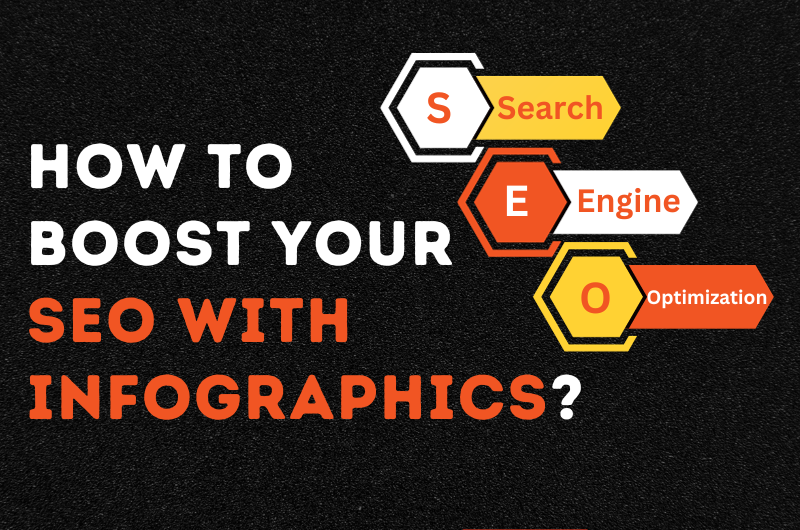
How to Boost Your SEO with Infographics? A Complete Guide

Are you looking to boost your SEO with infographics? Here is a complete guide to help you out. Infographics have taken over as people have less time to read a whole research paper for new discoveries. SEO trends show that in the coming years, your audience will rely on concise and informative content, and that is exactly what infographics provide. You may be creating the best visuals and carrying out expert research, but you still need SEO to reach the right audience. In this blog, we will provide you with a detailed guide on how to boost your SEO with infographics. First, we will define what infographics are and the benefits that they provide you as a creator. Then, we will look at how you can create infographics that are optimised for SEO. Let’s begin! If you are looking for valuable content creation, Visit SEO Syrup. What are Infographics? Infographics are visual representations of information and data that provide your audience with simplified content. They turn complex research into a concise, clear visual that can be understood at first glance. With the rapid evolution of technology and the use of social media, infographics are content that engages your audience. If you are not creating infographics, you might be missing out on countless benefits. Benefits of Infographics As a content creator, you should be using infographics to stand out from your competitors. Infographics are highly engaging and often go viral on social media as your audience discovers new information. Following are some of the benefits of infographics: Increased visibility with the potential of going viral on social media. Enhanced engagement as your audience shares it within their circle Increased brand awareness, establishing you as an authority. Improved website traffic through referrals and backlinks. Competitive advantage over your competitors to attract more clients. Boost Your SEO With Infographics in 5 Steps Creating infographics is one thing, but to boost your SEO with infographics, you will have to go a step further. SEO is the magic tool that establishes your online presence and gets you higher traffic, sales, and conversions. Not to discourage you, but you can carry out groundbreaking research and create breathtaking infographics, and it may still go unnoticed. Follow the steps below to boost your SEO with infographics. 1. Set Your Goals Before developing your content, you must always set your goals. This makes it easier for you to understand what you hope to achieve by devoting your time and effort to the content. Set goals that are measurable, such as increasing your monthly traffic or social media following. In addition, if you are carrying out research, you may also need to set a budget that aligns with your goals. 2. Carry Out Detailed Research As the name suggests, infographics require information, and for that, you will need to do research. If you do not have the right analytics skills, it is always better to outsource the task. Carrying out original research is highly important because it provides new information to your audience. You could use the already-existing research but give it a personal touch by making valuable additions. 3. Design Your Infographic Now that you have the information that is interesting and helpful for the audience, you need to design your infographic. Having a graphic designer will make this step easy for you, but you can always attempt to do it on your own. Create a design that clearly visualises the information from your research. Make sure that your content is easily readable and understandable. Also, consult an expert or a team member to get their opinion. 4. Optimise for SEO With an initial design, it’s time to boost your SEO with infographics. Firstly, you will need to ensure that your content aligns with what your audience is searching for. For this, you will need to conduct keyword research. Next, choose the keywords that fit the best and have a high search volume. Incorporate these keywords into your content and also in the captions when you post on social media. But if you really want to stand out, use long-tail keywords. 5. Share it on Social Media  Your infographic has been optimised for SEO, and it’s time you start sharing it on social media. While sharing on social media, find the popular hashtags that align with the keyword research. In addition, you can publish the same content on your website in the form of blogs to provide a detailed overview. If you are looking for an SEO service provider in London, Contact Us! A Quick Summary Here is a quick summary of how to boost your SEO with infographics. Infographics are visual representations of data that are highly engaging and rewarding. To optimise your infographics for SEO, set goals that are measurable. Then conduct original research that adds value to people’s lives. Next, use your research to develop a visual representation that will grasp the audience’s attention. Once that is done, optimise it for SEO by incorporating the right keywords. Lastly, you will need to share it on social media using the right hashtags. We at SEO Syrup provide you with the best SEO services in the UK. Our team of SEO experts strives to create valuable content to place you higher on search engines. Reach out now to get an instant quote.

How to Boost Your SEO with Infographics? A Complete Guide Read More »

Shopfiy SEO in 2023

7 Best Practices for Shopify SEO in 2023

Are you looking for updated best practices for Shopify SEO in 2023? A lot has changed over the years, and if you are not up to date, you could lose business. Running a Shopify account is a hard task due to the changing algorithms. SEO trends are constantly changing with the rapid development of technology, and you must adapt to the changes. To help you out, we are here with the best practices for Shopify SEO in 2023. Read till the end to find the key updates and how they can improve your business. These practices will result in higher website traffic and generate more leads. Let’s begin! If you need SEO Services for Shopify, Contact Us! 7 Practices for Shopify SEO in 2023 that Boost Store Traffic It is 2023 and a lot has changed while there are other things that still matter as much as they did previously.  Nevertheless, SEO is still highly important for your Shopify business. It allows you to rank higher than your competitors and increases your online sales, generating higher revenue. Following are the 7 best practices for Shopisy SEO in 2023: 1. Conduct Keyword Research A lot has changed but there are some basics that you still cannot neglect. Conducting keyword research has never been more important for your business. Search engines have become more advanced to adapt to the changing methods of search inquiries. Therefore, paying close attention to these changes and implementing a targeted keyword strategy is still important. In addition, with the rise of voice assistants people are having conversations with their phones. This allows the search engines to provide them with results by understanding the intent behind their inquiries. You can capture this opportunity by incorporating long-tail keywords that correspond with user intents. 2. Optimise Product Titles Shopify SEO in 2023 demands the optimisation of product tiles. You need to show search engines what you are selling with key-rich content. Apart from your titles, this also includes product descriptions. Write human-friendly content that is helpful for the user as it is highly ranked by search engine algorithms. 3. Clarify Your URL Structure With easy accessibility, Shopify sellers have drastically increased and this means you have become harder to find. So to establish a brand identity, you need to clarify your URL structure. Ensure that there is no other seller with a similar name. In addition, mentioning your niche in the URL also makes it easier for your prospects to find you. 4. Optimise Your Website for Mobile Devices To implement the best practices for Shopify SEO in 2023, you need to ensure that your website has been optimised for mobile devices. The first reason why it’s important is that search engine algorithms rank you based on your mobile optimisation. In addition, a good website reduces your bounce rate and engages your audience, signalling to algorithms that your website is of high value. 5. Showcase Your Buyer Reviews Buyer reviews are social proof of your products and services. They show your prospects whether you are a trustworthy seller. Even in 2023, we are still concerned about whether we will get the product that we ordered. So to convert your traffic, provide them with buyer reviews so they can easily make their decision. In addition, you should also automate your interactions with your customers, encouraging them to provide reviews. 6. Submit Your Sitemap Your store will only be ranked if it is properly indexed by search engines. You can enhance the indexing by submitting a sitemap of your website. This provides algorithms with the complete structure of your website and allows smooth indexing. In addition, implementing this practice for Shopify SEO in 2023 will provide you with faster results. You will see your traffic drastically increase and start getting orders. 7. Optimise Your Images Like any other website, your Shopify store is ranked for its performance. Make sure that your website is functioning smoothly, facilitating users instead of directing them to your competitors. To do this, you will need to optimise your images and other visual content. As they are large, they can slow down the loading speed. So ensure that you compress your images for optimisation. If you need help with SEO for Shopify Services, Visit SEO Syrup! Wrapping it Up! Shopify SEO in 2023, although changed, still requires you to follow some basic practices. This includes conducting keyword research, but now you should focus on long-tail keywords as well. Further, optimise your product titles and descriptions to align with your keyword research. Also, ensure that your URL structure is unique and consists of your niche to make it stand out. Furthermore, your website should be optimised for mobile users while providing buyer reviews. Also, submit your sitemap for smooth indexing and regular updates. Lastly, improve your website speed by optimising your images and other large-sized files. At SEO Syrup, we understand the challenges of Shopify stores and provide you with a dedicated team of SEO experts to increase your traffic and Sales. Get an instant quote now!

7 Best Practices for Shopify SEO in 2023 Read More »

How to Write a Blog for SEO

How to Write a Blog for SEO? A Complete Guide

You may be an adept writer, but do you know how to write a blog that will rank higher on SERPs? If you don’t know, we are here with a comprehensive guide just for you. Blog writing requires a lot of effort. You have to learn about the topic, develop a clear structure, and then write without any factual or grammatical errors. But what’s the purpose if no one is reading it? All of your effort goes to waste. To help you write blogs that attract people, you will need to learn about search engine optimisation. So in this blog, we will provide you with a complete guide on how to write a blog optimised for SEO. By following this guide, you will attract readers who are interested in your blog and who will come back for more. Let’s begin. If you want to create valuable content for your readers, Contact Us! How to Write a Blog for SEO in 7 Easy Steps This guide has been created for people writing blogs but not getting any traffic. Following the steps below will allow you to rank higher on search engines while engaging your audience, which can benefit from your blogs. Follow these instructions through to the end to see an increase in your readership.  1. Conduct Keyword Research Keyword research is highly important for not only blogs but also for publishing any type of content online. If you are posting content without conducting thorough research, you are shooting in the dark. Conduct keyword research to understand what your audience is searching for and make a list of all relevant keywords. Click here for a complete guide on carrying out keyword research. 2. Select a Focus Keyword After you have listed all of the relevant keywords, you will need to select one that works best for you. Choosing a keyword that has low keyword difficulty will allow you to easily rank for it. You can also use long-tail keywords to attract a specific audience that is more likely to read your blog. 3. Write Your Blog and Be Original Now that you have chosen a keyword you can start writing. Write a blog that is easier to read and uses a conversational tone to rank higher in SERPs. Ensure that your blog is grammatically and factually correct. But, you are probably an experienced writer so we will leave that up to you. 4. Break Your Content into Relevant Subheadings After the last step, you will have created content that revolves around a focus keyword. Now break this content down into relevant headings and subheadings. Ensure that you sprinkle your focus keyword across your headings. In addition, if you have long paragraphs, divide them so they are not longer than 5–6 sentences each. 5. Optimise On-Page Elements Next, you will need to optimise on-page SEO elements such as tags, meta title and description. Add the focus keywords in your description and the title to rank higher for those keywords. 6. Add Internal and External Links You are not done yet; search engines rank your pages for their integration and their relevance. Add internal and external links to prove to algorithms that your content is of high value. Link building also enhances your authority on the topic. 7. Add and Optimise Images The last step on your journey to becoming an influential blogger is adding and optimising your images and other media files. This is important as they are large in size and can slow down your website. Search engines also rank you for having a high-performing website. If you are looking for SEO services in London, visit SEO Syrup! A Quick Summary Writing a blog requires a lot of effort, and it can all go to waste if you do not know how to write a blog for SEO. You may be an adept writer, but if you are not implementing SEO, you will not get organic traffic. Nevertheless, it is still very simple to attract the right readership with the help of SEO. Firstly, you will need to conduct thorough keyword research and select a keyword that works best for you. Then, you can start writing your blog, but make sure that you are not copying from other sources. Now that you have a first draft, divide it into headings and subheadings to enhance readability. Next, optimise on-page elements and add links to enhance your blog’s relevance. Last but not least, make sure that your images are added and optimised. You can also avoid all this hassle with the help of SEO Syrup! We provide you with a team of SEO experts who understand the complexities of SEO and provide you with engaging content for your audience. Get an instant quote now!

How to Write a Blog for SEO? A Complete Guide Read More »