22 September 2023

SEO vs. PPC which is better

SEO vs. PPC: Which is the Best for Your Business?

Search engine optimisation and pay-per-click are both very effective marketing techniques, but let’s explore which is best for your business: SEO vs. PPC With the rapid development of marketing techniques, it has become imminent that you are aware of the difference between the both. This will allow you to use them effectively for your business growth. To have a clear understanding of how you can use SEO and PPC to build your online presence read this blog till the end. In this blog, we will first look at SEO and its advantages for your business. Then we will move on to PPC and its benefits for your business. In the end, we will provide you with an SEO vs. PPC comparison to compare them against each other. To see how your site is performing, get a free site audit now! What is SEO? SEO is a set of modern techniques that help you improve your ranking on search engines. It allows you to rank at the top of the SERPs, providing easy website access for your audience. A website that is at the top is more likely to get more traffic and therefore generate more revenue.  How SEO Benefits Your Business? SEO has countless benefits and advantages over PPC, which will be covered in this section. But remember that it also comes with its own unique challenges, which will also be covered below. 1. Enhanced Industry Authority  SEO marketing allows you to build industry authority with valuable content. Your business is seen as an expert by your audience, who reads detailed blogs that resolve their problems. But you will need to publish high-value content, for which you will require a separate team.  2. Higher Lead Generation and Conversions With SEO, you can build a strong online presence that derives more traffic. If you are ranking at the top of the SERPs, you are going to generate better leads and increase your content rate. However, ranking for competitive keywords can be tough and take months. 3. Sustainable Long-term Growth SEO is a long-term investment. Its results are not sudden, and to benefit from SEO, you will need to spend your energy and resources. But, it will have a long-term impact on your business. Once you start getting ranked, your business improves gradually, and you start experiencing higher website traffic. Click here to learn about the 10 common SEO mistakes that businesses make. What is PPC? PPC, on the other hand, is an advertising strategy that helps businesses get more traffic with online ads. It costs you each time a user clicks on your online ad to access your content. You can also call them a paid method to generate traffic in the short run. As long as you are paying, you will experience an enhanced online presence. How PPC Benefits Your Business? Although expensive, PPC has its own advantages for businesses. It can also provide extremely effective leads, but not in the long run. 1. Targeted Traffic Online PPC ads are targeted using user data. Your ads will be shown to individuals who are interested in your business. Nevertheless, targeted traffic does not necessarily mean that the users will make a purchase. They might just click on your website for informational purposes. 2. Instant Audience Impact PPC has an instant effect. You post an ad, and you will start seeing the results the next moment. It is a great way to introduce yourself to the industry. However, as soon as you stop paying, you will see that the effect is gone. 3. Short-term Sales PPC ads are a great way to make short-term sales, and businesses are often using them for this purpose. They increase your traffic and sales by targeting people who are willing to make a purchase. But again, the effect only lasts until you pay. SEO vs. PPC When it comes to SEO vs. PPC, you cannot choose between the two. They have their own unique advantages, and you should incorporate both of them into your marketing strategy. When you need a sudden impact, use PPC and SEO to build a long-term online presence. The Bottom Line SEO vs. PPC can be summarised by the fact that they are two very effective marketing strategies in the modern era. SEO allows you to rank higher on SERPs, while PPC targets your potential clients with ads. Both of these techniques can guarantee you higher revenue for business expansion. What sets them apart is the duration of their impact and their pricing. PPC can be effective in the short run but highly expensive if you continue it for longer periods. On the other hand, SEO is expensive at the start, but it has a long-term effect. Incorporating both of these techniques into your marketing strategy is the wiser option. We at SEO Syrup provide you with the best SEO and PPC services in the UK. Contact us now or get an instant quote.

SEO vs. PPC: Which is the Best for Your Business? Read More »
How to Boost Your SEO with Infographics

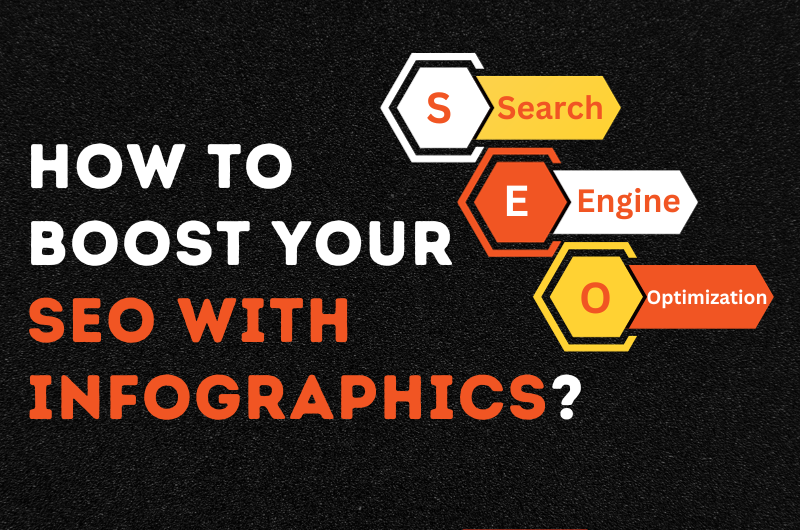
How to Boost Your SEO with Infographics? A Complete Guide

Are you looking to boost your SEO with infographics? Here is a complete guide to help you out. Infographics have taken over as people have less time to read a whole research paper for new discoveries. SEO trends show that in the coming years, your audience will rely on concise and informative content, and that is exactly what infographics provide. You may be creating the best visuals and carrying out expert research, but you still need SEO to reach the right audience. In this blog, we will provide you with a detailed guide on how to boost your SEO with infographics. First, we will define what infographics are and the benefits that they provide you as a creator. Then, we will look at how you can create infographics that are optimised for SEO. Let’s begin! If you are looking for valuable content creation, Visit SEO Syrup. What are Infographics? Infographics are visual representations of information and data that provide your audience with simplified content. They turn complex research into a concise, clear visual that can be understood at first glance. With the rapid evolution of technology and the use of social media, infographics are content that engages your audience. If you are not creating infographics, you might be missing out on countless benefits. Benefits of Infographics As a content creator, you should be using infographics to stand out from your competitors. Infographics are highly engaging and often go viral on social media as your audience discovers new information. Following are some of the benefits of infographics: Increased visibility with the potential of going viral on social media. Enhanced engagement as your audience shares it within their circle Increased brand awareness, establishing you as an authority. Improved website traffic through referrals and backlinks. Competitive advantage over your competitors to attract more clients. Boost Your SEO With Infographics in 5 Steps Creating infographics is one thing, but to boost your SEO with infographics, you will have to go a step further. SEO is the magic tool that establishes your online presence and gets you higher traffic, sales, and conversions. Not to discourage you, but you can carry out groundbreaking research and create breathtaking infographics, and it may still go unnoticed. Follow the steps below to boost your SEO with infographics. 1. Set Your Goals Before developing your content, you must always set your goals. This makes it easier for you to understand what you hope to achieve by devoting your time and effort to the content. Set goals that are measurable, such as increasing your monthly traffic or social media following. In addition, if you are carrying out research, you may also need to set a budget that aligns with your goals. 2. Carry Out Detailed Research As the name suggests, infographics require information, and for that, you will need to do research. If you do not have the right analytics skills, it is always better to outsource the task. Carrying out original research is highly important because it provides new information to your audience. You could use the already-existing research but give it a personal touch by making valuable additions. 3. Design Your Infographic Now that you have the information that is interesting and helpful for the audience, you need to design your infographic. Having a graphic designer will make this step easy for you, but you can always attempt to do it on your own. Create a design that clearly visualises the information from your research. Make sure that your content is easily readable and understandable. Also, consult an expert or a team member to get their opinion. 4. Optimise for SEO With an initial design, it’s time to boost your SEO with infographics. Firstly, you will need to ensure that your content aligns with what your audience is searching for. For this, you will need to conduct keyword research. Next, choose the keywords that fit the best and have a high search volume. Incorporate these keywords into your content and also in the captions when you post on social media. But if you really want to stand out, use long-tail keywords. 5. Share it on Social Media  Your infographic has been optimised for SEO, and it’s time you start sharing it on social media. While sharing on social media, find the popular hashtags that align with the keyword research. In addition, you can publish the same content on your website in the form of blogs to provide a detailed overview. If you are looking for an SEO service provider in London, Contact Us! A Quick Summary Here is a quick summary of how to boost your SEO with infographics. Infographics are visual representations of data that are highly engaging and rewarding. To optimise your infographics for SEO, set goals that are measurable. Then conduct original research that adds value to people’s lives. Next, use your research to develop a visual representation that will grasp the audience’s attention. Once that is done, optimise it for SEO by incorporating the right keywords. Lastly, you will need to share it on social media using the right hashtags. We at SEO Syrup provide you with the best SEO services in the UK. Our team of SEO experts strives to create valuable content to place you higher on search engines. Reach out now to get an instant quote.

How to Boost Your SEO with Infographics? A Complete Guide Read More »

Shopfiy SEO in 2023

7 Best Practices for Shopify SEO in 2023

Are you looking for updated best practices for Shopify SEO in 2023? A lot has changed over the years, and if you are not up to date, you could lose business. Running a Shopify account is a hard task due to the changing algorithms. SEO trends are constantly changing with the rapid development of technology, and you must adapt to the changes. To help you out, we are here with the best practices for Shopify SEO in 2023. Read till the end to find the key updates and how they can improve your business. These practices will result in higher website traffic and generate more leads. Let’s begin! If you need SEO Services for Shopify, Contact Us! 7 Practices for Shopify SEO in 2023 that Boost Store Traffic It is 2023 and a lot has changed while there are other things that still matter as much as they did previously.  Nevertheless, SEO is still highly important for your Shopify business. It allows you to rank higher than your competitors and increases your online sales, generating higher revenue. Following are the 7 best practices for Shopisy SEO in 2023: 1. Conduct Keyword Research A lot has changed but there are some basics that you still cannot neglect. Conducting keyword research has never been more important for your business. Search engines have become more advanced to adapt to the changing methods of search inquiries. Therefore, paying close attention to these changes and implementing a targeted keyword strategy is still important. In addition, with the rise of voice assistants people are having conversations with their phones. This allows the search engines to provide them with results by understanding the intent behind their inquiries. You can capture this opportunity by incorporating long-tail keywords that correspond with user intents. 2. Optimise Product Titles Shopify SEO in 2023 demands the optimisation of product tiles. You need to show search engines what you are selling with key-rich content. Apart from your titles, this also includes product descriptions. Write human-friendly content that is helpful for the user as it is highly ranked by search engine algorithms. 3. Clarify Your URL Structure With easy accessibility, Shopify sellers have drastically increased and this means you have become harder to find. So to establish a brand identity, you need to clarify your URL structure. Ensure that there is no other seller with a similar name. In addition, mentioning your niche in the URL also makes it easier for your prospects to find you. 4. Optimise Your Website for Mobile Devices To implement the best practices for Shopify SEO in 2023, you need to ensure that your website has been optimised for mobile devices. The first reason why it’s important is that search engine algorithms rank you based on your mobile optimisation. In addition, a good website reduces your bounce rate and engages your audience, signalling to algorithms that your website is of high value. 5. Showcase Your Buyer Reviews Buyer reviews are social proof of your products and services. They show your prospects whether you are a trustworthy seller. Even in 2023, we are still concerned about whether we will get the product that we ordered. So to convert your traffic, provide them with buyer reviews so they can easily make their decision. In addition, you should also automate your interactions with your customers, encouraging them to provide reviews. 6. Submit Your Sitemap Your store will only be ranked if it is properly indexed by search engines. You can enhance the indexing by submitting a sitemap of your website. This provides algorithms with the complete structure of your website and allows smooth indexing. In addition, implementing this practice for Shopify SEO in 2023 will provide you with faster results. You will see your traffic drastically increase and start getting orders. 7. Optimise Your Images Like any other website, your Shopify store is ranked for its performance. Make sure that your website is functioning smoothly, facilitating users instead of directing them to your competitors. To do this, you will need to optimise your images and other visual content. As they are large, they can slow down the loading speed. So ensure that you compress your images for optimisation. If you need help with SEO for Shopify Services, Visit SEO Syrup! Wrapping it Up! Shopify SEO in 2023, although changed, still requires you to follow some basic practices. This includes conducting keyword research, but now you should focus on long-tail keywords as well. Further, optimise your product titles and descriptions to align with your keyword research. Also, ensure that your URL structure is unique and consists of your niche to make it stand out. Furthermore, your website should be optimised for mobile users while providing buyer reviews. Also, submit your sitemap for smooth indexing and regular updates. Lastly, improve your website speed by optimising your images and other large-sized files. At SEO Syrup, we understand the challenges of Shopify stores and provide you with a dedicated team of SEO experts to increase your traffic and Sales. Get an instant quote now!

7 Best Practices for Shopify SEO in 2023 Read More »

How to Write a Blog for SEO

How to Write a Blog for SEO? A Complete Guide

You may be an adept writer, but do you know how to write a blog that will rank higher on SERPs? If you don’t know, we are here with a comprehensive guide just for you. Blog writing requires a lot of effort. You have to learn about the topic, develop a clear structure, and then write without any factual or grammatical errors. But what’s the purpose if no one is reading it? All of your effort goes to waste. To help you write blogs that attract people, you will need to learn about search engine optimisation. So in this blog, we will provide you with a complete guide on how to write a blog optimised for SEO. By following this guide, you will attract readers who are interested in your blog and who will come back for more. Let’s begin. If you want to create valuable content for your readers, Contact Us! How to Write a Blog for SEO in 7 Easy Steps This guide has been created for people writing blogs but not getting any traffic. Following the steps below will allow you to rank higher on search engines while engaging your audience, which can benefit from your blogs. Follow these instructions through to the end to see an increase in your readership.  1. Conduct Keyword Research Keyword research is highly important for not only blogs but also for publishing any type of content online. If you are posting content without conducting thorough research, you are shooting in the dark. Conduct keyword research to understand what your audience is searching for and make a list of all relevant keywords. Click here for a complete guide on carrying out keyword research. 2. Select a Focus Keyword After you have listed all of the relevant keywords, you will need to select one that works best for you. Choosing a keyword that has low keyword difficulty will allow you to easily rank for it. You can also use long-tail keywords to attract a specific audience that is more likely to read your blog. 3. Write Your Blog and Be Original Now that you have chosen a keyword you can start writing. Write a blog that is easier to read and uses a conversational tone to rank higher in SERPs. Ensure that your blog is grammatically and factually correct. But, you are probably an experienced writer so we will leave that up to you. 4. Break Your Content into Relevant Subheadings After the last step, you will have created content that revolves around a focus keyword. Now break this content down into relevant headings and subheadings. Ensure that you sprinkle your focus keyword across your headings. In addition, if you have long paragraphs, divide them so they are not longer than 5–6 sentences each. 5. Optimise On-Page Elements Next, you will need to optimise on-page SEO elements such as tags, meta title and description. Add the focus keywords in your description and the title to rank higher for those keywords. 6. Add Internal and External Links You are not done yet; search engines rank your pages for their integration and their relevance. Add internal and external links to prove to algorithms that your content is of high value. Link building also enhances your authority on the topic. 7. Add and Optimise Images The last step on your journey to becoming an influential blogger is adding and optimising your images and other media files. This is important as they are large in size and can slow down your website. Search engines also rank you for having a high-performing website. If you are looking for SEO services in London, visit SEO Syrup! A Quick Summary Writing a blog requires a lot of effort, and it can all go to waste if you do not know how to write a blog for SEO. You may be an adept writer, but if you are not implementing SEO, you will not get organic traffic. Nevertheless, it is still very simple to attract the right readership with the help of SEO. Firstly, you will need to conduct thorough keyword research and select a keyword that works best for you. Then, you can start writing your blog, but make sure that you are not copying from other sources. Now that you have a first draft, divide it into headings and subheadings to enhance readability. Next, optimise on-page elements and add links to enhance your blog’s relevance. Last but not least, make sure that your images are added and optimised. You can also avoid all this hassle with the help of SEO Syrup! We provide you with a team of SEO experts who understand the complexities of SEO and provide you with engaging content for your audience. Get an instant quote now!

How to Write a Blog for SEO? A Complete Guide Read More »